

6 min read
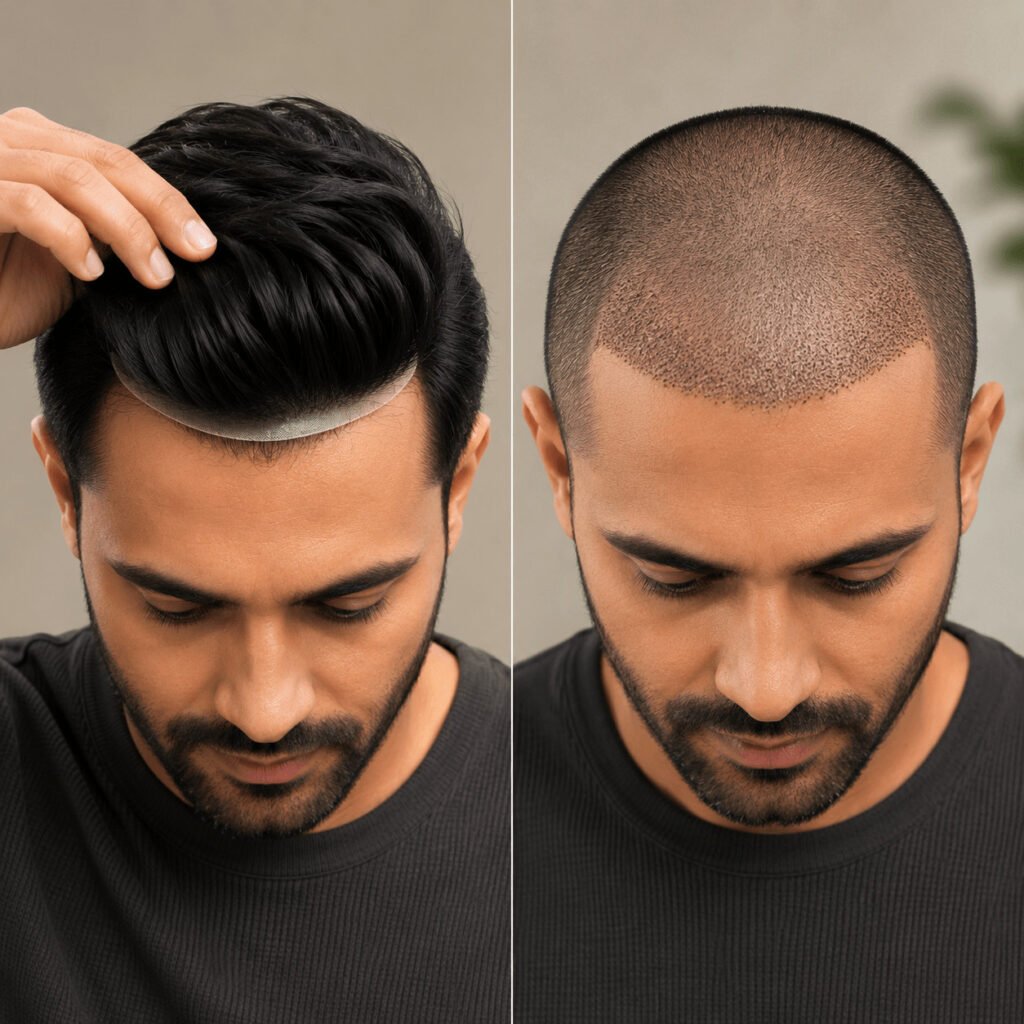
Hair Patch vs Hair Transplant — Questions Answered
Quick answer: A hair patch is a non-surgical hairpiece bonded to the scalp that delivers immediate results with no downtime, while a hair transplant is a surgical procedure that permanently relocates your own hair but takes months to show full results and involves recovery; rather than framing one as superior, it’s clearer to say that each option works for different kinds of expectations — patches suit men who want an instant, reversible, lower-commitment fix or who don’t have enough donor hair, while transplants suit men who want a permanent surgical solution and are prepared for the cost, healing, and wait.
This is the comparison men ask for most once they’ve decided they want a real fix — here’s how the two options actually stack up, pros and cons included.
What’s the core difference between a hair patch and a hair transplant?
A hair patch is a non-surgical hairpiece bonded to your scalp, while a hair transplant is a surgical procedure that moves your own hair follicles from a donor area to the thinning area, where they then grow permanently.
A hair patch gives instant coverage but needs ongoing maintenance and replacement, while a hair transplant becomes part of your own growing hair after healing; the trade-off is surgery, recovery, and waiting for results, with quality depending on donor hair and surgical skill, whereas patches guarantee immediate density and styling flexibility.
Hair patch vs hair transplant: side-by-side comparison
Here’s how the two compare on the factors that matter most when deciding:
| Factor | Hair Patch | Hair Transplant |
| Cost | Lower upfront, ongoing maintenance over years | Higher one-time cost, no recurring patch expense |
| Time to results | Immediate — same day | Gradual — full results in 9–12 months |
| Pain / downtime | None, zero downtime | Minor surgical pain, days to weeks of recovery |
| Permanence | Not permanent — maintained and replaced over time | Permanent — transplanted hair grows for life but can lose hair after sometime |
| Upkeep | Regular maintenance visits, periodic base replacement | Normal haircare once healed, but ongoing medical maintenance is common — many patients continue PRP sessions or use medications like minoxidil/finasteride to sustain follicle health, which adds cost and effort. |
| Who it suits | Men wanting an immediate, reversible fix, or limited donor hair and not looking to go for expensive surgeries or excruciating pain. | Men with sufficient donor hair wanting a permanent surgical fix |
Which one looks more natural?
Both can look highly natural when done well, but for different reasons — a transplant grows as your own hair because it is your own hair, while a well-fitted patch achieves the same look through precise colour-matching and hairline design rather than biological regrowth.
A poorly executed version of either can look obviously artificial: patchy regrowth from an inexperienced transplant clinic, or a mismatched, off-the-shelf patch. The skill of the provider matters more than the method itself.
Which involves more pain and downtime?
A hair transplant involves minor surgical pain and several days to two weeks of visible downtime — redness and scabbing — as the scalp heals. A hair patch involves no pain and zero downtime at all.
This is one of the biggest practical differences between the two. If you can’t take time off work, or simply want to avoid any recovery period, a patch is the lower-friction option.
Which gives faster results?
A hair patch gives an immediate result — you leave your fitting with a full head of hair the same day. A transplant takes much longer: transplanted follicles shed initially, then regrow gradually over 9 to 12 months before you see the final outcome.
Men who need a quick fix for an event, or simply don’t want to wait nearly a year to see results, often lean toward a patch; it also appeals to those avoiding surgery due to fear or pain, anyone wanting to curtail expenses, and those seeking greater density than their donor hair could provide through a transplant.
Which is more expensive over the long run?
A hair patch has a lower starting cost but adds up over years through ongoing maintenance and periodic base replacement. A hair transplant costs significantly more upfront but doesn’t involve recurring patch-replacement once healed; however, maintenance is still part of the journey — many patients continue PRP sessions or use medications like minoxidil/finasteride to sustain follicle health, which adds ongoing expense and effort
Is a hair transplant permanent, and what does that mean compared to a patch?
A hair transplant is supposed to be permanent because transplanted follicles are typically resistant to balding and continue growing for life. In practice, however, many men experience further hair loss over time — Topee has had clients who underwent transplants and returned for a hair patch after 3–5 years when thinning resumed. By contrast, a patch is not permanent but offers flexibility: it can be modified, upgraded, or stopped at any time, making it a maintained, replaceable solution rather than a one-time fix.
“Permanent” also means a transplant can’t be undone or adjusted later if your preferences change, while a patch can be modified, upgraded, or stopped at any time.
Which is better for advanced (severe) baldness?
For advanced or extensive baldness, a hair patch is usually the more reliable option, since it doesn’t depend on having enough donor hair. A transplant requires sufficient healthy hair elsewhere on your scalp to relocate, which becomes limited at advanced stages.
A transplant surgeon will assess your donor supply directly; if it’s insufficient for the area you want covered, a patch becomes the more realistic route regardless of preference.
Can I switch from a patch to a transplant later, or vice versa?
Yes, the two aren’t mutually exclusive — some men start with a hair patch and move to a transplant later, while others get a transplant and use a patch temporarily afterward for extra density during the growth period.
Switching from years of patch-wear to surgery is also possible at any time, though it’s worth a brief scalp assessment first to confirm donor hair condition.
Which one should I choose?
Choose a hair patch if you want an immediate, painless, lower-commitment option, or if your donor hair supply is limited. Choose a transplant if you want a permanent, surgical solution and are comfortable with the cost, healing time, and waiting period for results.
The honest answer is that it depends on your hair loss stage, budget, and tolerance for downtime — a consultation is the only way to get advice specific to your situation rather than a generic answer.
Key takeaways
- A patch is non-surgical, immediate, and reversible; a transplant is surgical, permanent, and gradual.
- Cost trades off differently — lower upfront for a patch, higher one-time for a transplant.
- Patches work regardless of donor hair supply; transplants need enough healthy donor hair.
- Many men try a patch before committing to a transplant.
- The right choice depends on your hair loss stage, budget, and downtime tolerance — get a personal consultation either way.
Not sure which fits your situation? [Book a free consultation at Topee’s Old Airport Road or Bellandur studio ?]
Reviewed by Topee’s lead hair specialist. Topee is a men’s hair solutions studio in Bengaluru (Old Airport Road and Bellandur), specialising in non-surgical hair systems, patches, and wigs.
Still weighing it up?
The consultation is free, takes 30–60 minutes, and you leave with an exact price and no obligation.
Book a free consultation